Tuesday, November 29, 2011

Chicken Stroganoff

Stroganoff is usually made with beef. And sour cream. And often brandy and lots of butter.

A great strog can be a great weekly staple since it's actually quite easy to make and usually pleases the kids. And if you're going to make it a weekly (or fortnightly) meal, then your waistline may not thank you for the large doses of sour cream ingested on a regular basis. And you may not want to serve a sauce containing booze to your kids.

So here's my "light" version, one made minus the brandy and the heavy cream.


Chicken Stroganoff
(Serves 4-6)

3 tbsp olive oil
1 large brown onion, diced
6 chicken thighs, diced into chunks
6 large field mushrooms, diced into chunks
1/4 tspn paprika
3 tbsp tomato paste
3/4 cup chicken stock
185ml tin of Carnation light and creamy evaporated milk
1 tbsp cornflour
2 tbsp chopped parsley

Heat the olive oil in a large saucepan and gently fry the onion until it begins to turn translucent. Add the diced chicken and cook until it's browned all over. Add the mushrooms and continue cooking until the chicken has almost cooked through and the mushrooms have softened.

Add the paprika and cook for 1 minute then add the tomato paste and stock. Bring the stroganoff to the boil, then turn the heat down to a very gentle simmer.

Mix the evaporated milk and cornflour together then add to the saucepan along with some salt and pepper. Simmer the stroganoff until it's thick and has a creamy consistency.

Mix in the chopped parsely then serve over pasta, rice or buttery mashed potato.

Wednesday, October 26, 2011

Green Chicken Pie

This year I've planted my first veggie patch and much to my surprise, I've had a bumper crop of silverbeet so I've had to become inventive and figure out a few recipes to use it up before the caterpillars ate it all!

So let me introduce you to my Green Chicken Pie. I took some inspiration from the traditional English shephard's pie which has a meaty-veggie base topped with mashed potato and then baked.

I know, I know - you're all remembering the boiled and grey silverbeet you were probably served up as a child, but trust me - after you've eaten my green chicken pie, you'll fall in love with this versatile and under-rated veggie.


Green Chicken Pie
(Serves 4)

3 tbsp olive oil
1 large brown onion, diced
6 large silverbeet leaves, stems finely diced and leaves shredded
4-5 large chicken thighs (skinless, boneless), cut into chunks
3 garlic cloves, crushed
1 tspn fennel seeds, ground
2 tbsp plain flour
1/2 cup white wine
1 1/2 cups chicken stock
1 small bunch flat leaf parsley, roughly chopped
5-6 royal blue potatoes, peeled and diced
100g butter


Preheat the oven to 220C. Grease a 2-3 litre casserole dish then place this on a baking pan or another type of "catcher" in case of over-spill!

Heat the oil over medium heat in a deep saucepan and gently saute the onion and silverbeet stems until the onion is translucent. Add the diced chicken and cook until the chicken is almost cooked through.

Add the garlic and fennel seeds and cook for 1 minute. Add the flour and cook for another minute. Stir in the white wine and bring the mixture to the boil then add the chicken stock. Turn the heat back down to medium, stir in plenty of freshly cracked black pepper and a bit of salt then let the mixture simmer for about 15 minutes or until the sauce has thickened. Thrown in the silverbeet leaves and parsley and mix in.

Meanwhile, boil the diced potatoes until tender. Drain then mash with the butter, plenty of salt and a pinch of pepper.

Spoon the chicken and silverbeet mixture into the casserole dish then top with the mashed potatoes. Pop this into the oven for 15-20 minutes or until the potato on top begins to brown a little.

Serve this with a side of blanched veggies or just as it is.

Wednesday, September 21, 2011

Nicoise Salad

Nicoise salad is one of those wonderfully robust French salads that can be a complete meal, rather than just a bit of decorative greenery on the side of your plate. You know, next to the 300g slab of beef, the barbequed sausages or the chicken kebabs.

This is my take on a Nicoise salad. Traditionally, the salad contains tuna and anchovies and never contains any leaves (such as lettuce or baby spinach leaves). I prefer mine slightly untraditional.


Nicoise Salad
(Serves 4-6)

6 baby potatoes
150g fresh green beans
1 packet of washed leaves (lettuce or spinach) from the supermarket
1 punnet of cherry or grape tomatoes, halves
4 hard-boiled eggs, quartered
1 cup of black olives (preferably pitted)
2 tbsp olive oil
1 tbsp lemon juice
2 tbsp white wine vinegar
2 tspn dijon mustard

Boil the baby potatoes (whole - no need to peel them either!) until they are tender. Drain and rinse under cold running water. Briefly blanch the green beans and also rinse them under cold running water.

In a large salad bowl combine the salad leaves, potatoes, beans, tomatoes, eggs and olives.

If you have a small container with a lid, use that to make the salad dressing by tipping in the olive oil, lemon juice, vinegar, mustard and some fresh cracked black pepper and shaking the whole lot really well until it's combined. (If you don't have a little container with a lid, put the ingredients in a jug and whisk until emulsified.) Dress the salad then enjoy as a main meal or a side dish.

Note: If you'd like to add tuna (or even smoked salmon or chicken) to this salad, then I would suggest using approximately 500g.

Thursday, September 15, 2011

Beerenberg Berry Buttercream

Two days ago there was a knock at my front door. By the time I'd wrestled Henry the Sausage (dog) into submission so I could open the front door without him bolting away, my friendly Australia Post neighbourhood delivery man was already rushing back to his van to get on with his deliveries. As always he gave me a cheerful wave and a cheeky grin before driving away.

At my doorstep was a welcome sight. A nice large package. It was from Beerenberg, a wonderful South Australian company who make gorgeous jams, preserves, sauces and condiments. Cue a few excited squeals.

I got the package inside, unleashed the hound (so he could have a quick bark at the front door so everyone knows this is HIS territory and no one is allowed to cross the threshold without receiving a good old lick) and tore open the package.

Inside, I found love. JAM! Glorious fruity sweet jam. It's no secret that I always (seriously, ALWAYS) have a jar of Beerenberg or my local WA Lavender and Berry Farm raspberry jam in my pantry - it's my favourite berry! But Beerenberg have sent me blueberry jam. It's their newest product and I'm chuffed to have received a jar before it hits supermarket shelves.


My first thought (after the initial excitement wore off) was: What can I do with it? Obviously, I'll be eating it on toast, crumpets, muffins, pikelets and just about every other breakfasty type food. But I did have a few other ideas, and the one that stuck out the most: Beerenberg Berry Buttercream.


Beerenberg Berry Buttercream

24 cupcakes (preferably vanilla)
50g butter
3 tbsp milk
1 tspn vanilla extract
2 cups icing sugar
1/4 cup Beerenberg blueberry jam

With an electric mixer, beat the butter for a minute or two then add the milk, vanilla and half of the icing sugar. Beat for 3-4 minutes, then add the remaining icing sugar and beat for a further 3-4 minutes until the buttercream is light and fluffy. Add the jam and beat briefly until combined.

Lightly spread a small amount of the buttercream onto the cupcakes. (Trust me, unless you're a hardcore sweet-tooth or catering for a children's party, you will only need a small amount of buttercream per cupcake - this buttercream is quite sweet.)

Next, sit back with a large cup of tea or coffee and enjoy a cupcake. Or two.

Note: If you'd like to use raspberry or strawberry jam, add a tiny amount of pink food colouring (when beating in the jam) to really bring out the colour.

Disclaimer: Whilst Beerenberg sent me some products for free, they in no way asked me to write about their products in a public forum. All opinions expressed are my own. (And my love of jam is real, just so you know...)

Sunday, September 11, 2011

Anzac Biscuits

Here in Australia, Anzac biscuits are a popular oat and coconut biscuit. The name originated back in World War I when wives and girlfriends of soldiers would send their loved ones these oat biscuits.

The biscuits have always been made without eggs (which, during WWI, were difficult to get as many farmers joined the war effort) and did not spoil during the long trips overseas, hence their popularity at the time.


Anzac Biscuits
(Makes 24)

1 cup rolled oats
1 cup plain flour
1 cup coconut
3/4 cup caster sugar
150g butter
3 tbsp golden syrup
1/2 tspn bi-carb soda
1 tbsp boiling water

Preheat your oven to 160C and line two baking trays with baking paper.

In a large bowl, stir together the oats, flour, coconut and caster sugar.

In a saucepan, melt the butter and golden syrup over low heat. In a small cup, mix together the bi-carb and water, add it to the melted butter mixture then straight away tip it into the flour mixture and stir it all really well.

Roll spoonfuls of the mixture into balls and put them on the baking trays. Flatten them with a lightly floured fork then pop them into the oven. If you like your biscuits chewier, cook them for 18-20 minutes. For a crunchier biscuit, bake them for 22-25 minutes.

Leave the biscuits to cool on the trays for about 5 minutes before removing them to a wire rack to cool completely.

Note: This recipe is very adaptable. You can make large or small biscuits; crunchy or chewy; add crushed peanuts or macadamia nuts, chocolate chips, chopped glace cherries or any variety of dried fruit. However, I have kept this recipe very traditional and think nothing can improve the original biscuit.

Tuesday, September 6, 2011

Spiced Prawns

Spiced Prawns
(Serves 2 adults as part of a main meal)

350g peeled and deveined prawns
4 tbsp olive oil
2 garlic cloves, crushed
1 tspn paprika (not hot or smoked, just the normal stuff)
3/4 tspn ground cumin
1/2 tspn ground ginger
1/2 tspn ground turmeric
1 small bunch coriander leaves (optional)

Heat the olive oil in a wok and stir fry the prawns until they are half cooked and starting to pink up. Add the garlic and ground spices and continue to stir fry until fragrant. Add a 1/4 cup of hot water and leave the prawns to simmer until the sauce has thickened and the prawns are cooked through. Season with salt and mix through the coriander.

Serve with warmed Turkish bread, salad and lemon wedges as part of a main meal.

These prawns can also be served as an entree to a dinner party or you can leave the tails on the prawns (as little handles) and fry up a large batch as finger food for a small party or family gathering.

Tuesday, August 23, 2011

Moroccan Fish

There is nothing better than fresh fish and whilst I'll always think the best way to eat it is very simply pan-fried with a lemon butter sauce, sometimes you need to jazz things up a bit.

This Moroccan-inspired recipe is very light but packed with the beautiful fresh flavours of tomatoes and herbs with just a few spices for added zing.


Moroccan Fish
(Serves 4)

4 tbsp olive oil
600g firm white fish, cut into chunks
Plain flour
1 leek, white part only, sliced
3 garlic cloves, crushed
3/4 tspn ground cumin
1 tspn paprika
4 large tomatoes, diced
1 zucchini, cut into 5mm slices, then quartered
1/2 cup stock (fish, chicken or vegetable - whatever you have!)
6 sprigs of thyme, leaves stripped off
1/4 tspn saffron threads
1 small bunch of fresh parsley, roughly chopped
1 small bunch of fresh coriander, roughly chopped

Heat the olive oil in a large pan. Lightly dust the chunks of fish with the flour (so it's all coated) then gently fry the fish until the outside begins to turn golden and the flesh is almost cooked through.

Add the leek and garlic and saute for 1 minute. The add the spices, tomatoes, zucchini, stock, thyme leaves and saffron. Season well with salt and pepper, pop a lid on the pan and let it all simmer over a low heat for 20 minutes. If it looks like it's drying out, add a splash of water. If it's too wet, simmer with the lid off for a few minutes - it should be nice and saucey.

Add the chopped parsley and coriander, stir through then immediately serve over cous cous or white rice.

Thursday, June 16, 2011

Naan Bread

I should preface this by stating I'm not Indian. I've never been professionally trained in Indian cuisine (or any other type of cuisine actually!) This is not a traditional recipe and it's not cooked in a traditional tandoor clay oven. This is just me trying to re-create a very difficult recipe in the average domestic kitchen.


Naan Bread
Makes 4

1/3 cup milk
1 tspn dry yeast
180g bread flour
1/4 tspn baking powder
1/8 tspn salt
1 tspn sesame seeds
1 tspn nigella (or kalonji) seeds
2 tspn vegetable oil
1/3 cup natural yoghurt

Warm the milk (in the microwave or on the stove) until it is lukewarm, then stir in the yeast and set it aside for 5 minutes.

Sift the flour, baking powder and salt into a bowl then mix in the sesame and nigella seeds. Tip in the milk, oil and half of the yoghurt. Mix the dough well with your fingers or a fork. If the dough is too dry then add a bit more yoghurt. If it's too wet then add some more flour.

Once you get the dough to a good consistency (soft and tacky, but not sticky), turn it onto your kitchen bench and knead it well for 5-10 minutes.

Rub a small amount of oil on the inside of a large clean bowl, gently put the dough into it then cover and leave the bowl somewhere warm for a few hours - until the naan has doubled in size.

Preheat your oven to 200C and lay some baking paper on the bottom of a good-sized baking tray.

Slice the ball of dough into quarters and gently roll out each quarter until they are about 6-7mm thick. Carefully place the naan onto the baking tray. To keep the bread from drying out too much in the oven, dip your fingers into a small bowl of water and flick the water droplets over a piece of dough. Repeat this for each piece of naan.

Cook the bread on the top shelf of the oven for 8 minutes, then turn the naan over and bake for further 6 minutes.

Lamb Kheema

Lamb kheema is a dry-style Indian curry using lamb mince (although you could try using beef or chicken mince if lamb mince isn't available). This is one of my favourite curries and I always serve it with naan bread and a gingery tomato chutney.


Lamb Kheema
Serves 4

2 tbsp vegetable oil
1 large onion, finely diced
5 garlic cloves, minced
8cm piece of ginger, grated
1 large red chilli, deseeded and finely chopped
3 bay leaves
500g lamb mince
1 1/2 tbsp ground coriander
1 1/2 tbsp ground cumin
1/4 tspn ground turmeric
1 heaped tbsp of tomato paste
2 heaped tbsp natural yoghurt
1 cup frozen peas
1/4 tspn garam masala
1 small handful fresh coriander, roughly chopped

Heat the oil in a large pan and gently saute the onion, garlic, ginger, chilli and bay leaves until the onion is translucent and the mixture is aromatic. Add the lamb mince and gently brown it.

Add the ground coriander, cumin and turmeric and mix it well into the lamb mince. Cook for 2 minutes and let the spices infuse the meat. Stir in the tomato paste, then stir in the yoghurt and cook the mixture for another 2 minutes. Add half a cup of water, stir it in, then cover the pan and leave the mixture to simmer for 15 minutes.

Stir in the peas and garam masala, season well with salt and pepper, cover the pan and leave to cook for 5 minutes. If, after this, the mince still looks a bit watery, leave it to simmer with the lid off to evaporate some of the excess moisture.

Remove the pan from the heat, remove the bay leaves, stir in the chopped coriander and serve hot with a tomato or mango chutney and any form of Indian bread.

Thursday, June 9, 2011

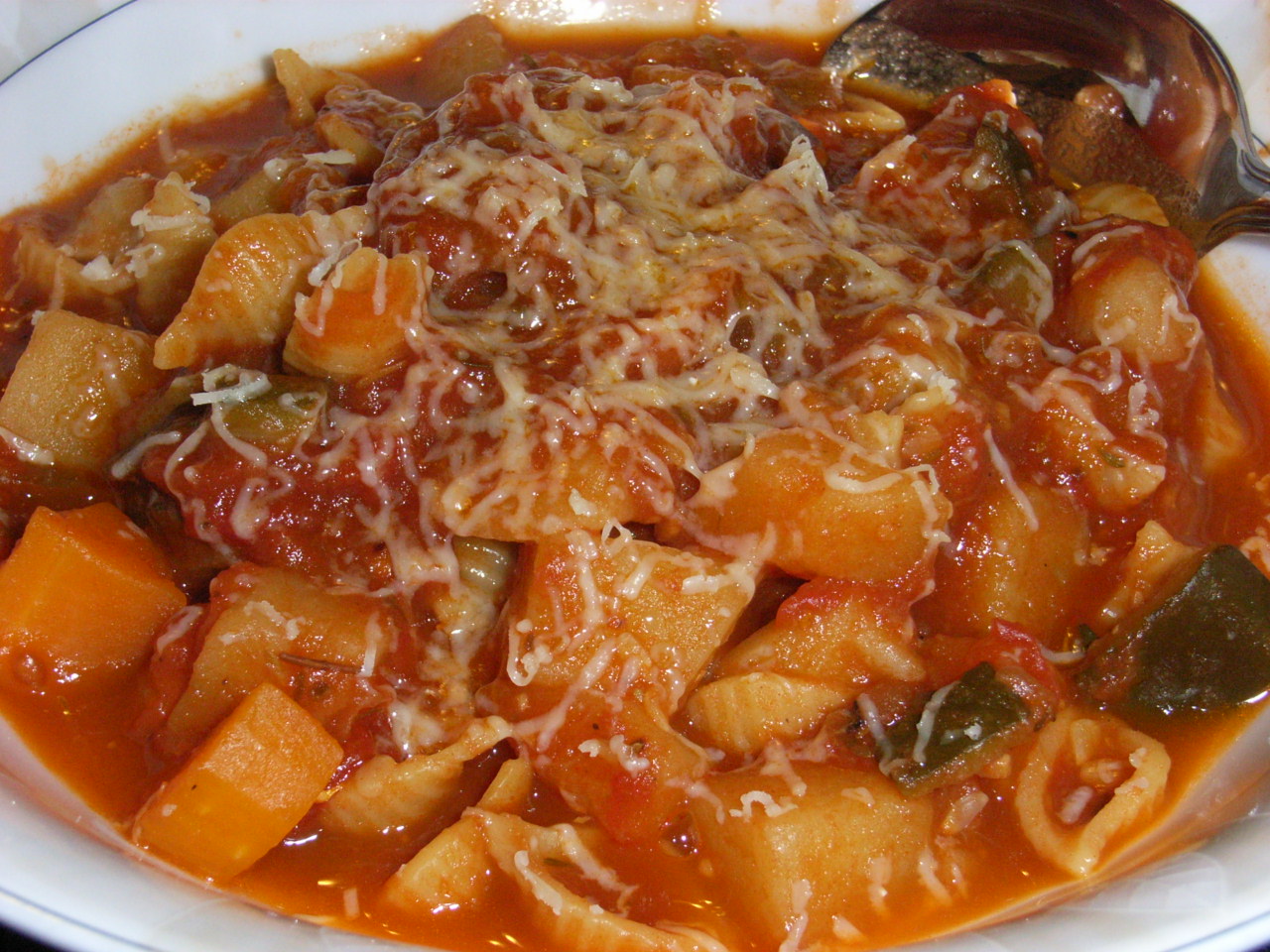
Minestrone Soup

It's winter here in Australia and I just adore cooking creamy pasta dishes, coconutty curries and rich casseroles. But you can have too much of a good thing so when I feel a little too indulged in rich wintery foods, I make this very light and reasonably healthy minestrone soup which is packed with veggies.


Minestrone Soup
(Serves 4)

Olive oil
1 onion, finely diced
2 cloves garlic, crushed
1 celery stick, diced
1 carrot, diced
2 bay leaves
2 sprigs of fresh thyme
1 large potato, diced
1 zucchini, diced
80g green beans, cut in half
1L beef stock (use veggie stock if you're vegetarian)
1 tin chopped tomatoes
1/4 cup macaroni
Grated parmesan

- Heat the olive oil in a large saucepan and add the onion. Gently saute until it begins to look translucent, then add the garlic, celery, carrot, bay leaves and thyme. Cook for 5 minutes then add the potato, zucchini and green beans. Cook for a further 5 minutes.

- Add the stock and tomatoes. Bring the soup to a boil then reduce the heat to low, cover and simmer for 1 1/2 hours, stirring occassionally. If the soup looks like it's drying out, add some hot water.

- Remove the thyme sprigs and bay leaves, then add the macaroni and cook for 15 minutes, or until the pasta is tender. Season well with salt and pepper then serve the soup in big bowls with the parmesan sprinkled over the top. (And if you're like me, you'll want some crusty, buttery bread on the side to mop up the liquid too!)